HorseHage Ryegrass 23.7kg is made from a selection of ryegrasses cut at an earlier stage of growth to provide optimum protein and energy levels.
- Great option for hunters, heavy horses, young stock, and breeding stock.
- Suitable for active horses in work and those who need a little more from their forage to improve weight and condition.
- Enables hard feeds to be reduced by up to a third which allows a more ‘natural’ diet helping to support your horse’s and pony’s digestive system is.
- Has a distinct, sweet aroma makes it unique, and it has a much finer texture than HorseHage High Fibre.
HorseHage Timothy grass is higher in fibre and lower in protein than many other types of grass, making it particularly suitable for leisure horses and ponies, native ponies, veterans and horses and ponies that are resting and convalescing or prone to laminitis. It is also an excellent fibre source that is a great choice for competition horses being fed high levels of concentrates.
Like HorseHage High Fibre, HorseHage Timothy also carries the HoofKind logo which indicates its suitability for horses and ponies prone to laminitis. This is also due to its unique fermentation process that the Timothy grass undergoes in the production of Timothy HorseHage – It keeps the sugar and starch levels considerably lower than in other forages.
Timothy has a completely different ‘nose’ to ryegrass, from which HorseHage Ryegrass and HorseHage High Fibre are made. It has a very similar nutrient analysis to High Fibre HorseHage and is highly palatable, making it ideal for fussy feeders or simply to add variety to the diets of those already being fed HorseHage.
As a member of the pea family, Alfalfa is a deep-rooting plant with nitrogen-fixing nodules on its roots. It can be cropped for 3-4 years as it is a perennial plant, and it is actually drought resistant.
HorseHage Alfalfa is produced using the very same methods as our other HorseHage ranges, so it has all of the same benefits including being completely dust-free and comes with our 100% quality guarantee.
Alfalfa has higher levels of protein, digestible fibre, energy, calcium and vitamins than grass. The protein content has the optimum balance of amino acids, particularly lysine which is especially important for growth, pregnancy and milk production. This high nutrient level makes it suitable for horses in hard work, poor doers, veterans and show horses.
HorseHage Alfalfa is available by special order through your local feed merchant. Feeding advice should be sought through our helpline before feeding for advice on suitability and quantity to feed.
HorseHage High Fibre has been made from selected ryegrasses which have been allowed to mature in order to attain high fibre and low protein and energy levels before harvesting. This means it is generally suitable for all riding club and Pony Club horses, native ponies, veterans, and those that are resting and convalescing.
The HoofKind logo indicates its suitability for horses and ponies prone to laminitis due to its low sugar and starch levels. This is achieved by the unique fermentation process that the grass undergoes which keeps these levels considerably lower than in other forages.
As the name suggests, HorseHage High Fibre is also an excellent fibre source that is a great choice for competition horses being fed high levels of concentrates.
Although made from the same ryegrass mix of grasses as HorseHage Ryegrass, it is cut at a later stage of growth which results in the low protein and high fibre levels. With a pleasant, sweet aroma, this dust-free forage is deep gold in colour with a coarse texture compared to HorseHage Ryegrass.
The Ultimate Guide to Choosing the Right Horse Hay
As an essential component of a horse’s diet, hay plays a crucial role in providing the necessary nutrients for their well-being and performance. Understanding the various types of horse hay available, their nutritional benefits, and how to select the right one is fundamental for every horse owner or caretaker. In this comprehensive guide, we’ll explore the different types of horse hay, delve into their nutritional values, offer tips on selecting the appropriate hay for different needs, and provide essential advice on proper hay storage to maintain its quality.
View our Horse Hay Get in touch
Different Types of Hay for Horses:
- Timothy Hay: Known for its high fibre content and moderate protein levels, Timothy hay is a popular choice for horses of all ages and activity levels. It provides essential roughage while aiding in digestion.
- Alfalfa Hay: Rich in protein, calcium, and other minerals, Alfalfa hay is an excellent choice for horses with higher energy requirements, such as pregnant or lactating mares and young growing foals.
- Orchard Grass: With its soft texture and sweet taste, Orchard grass hay is palatable to most horses. It’s a good source of fibre and nutrients, making it suitable for general feeding purposes.
- Bermuda Hay: Commonly grown in warmer climates, Bermuda hay offers a balanced nutritional profile with moderate protein and energy levels. It’s ideal for horses with moderate activity levels.
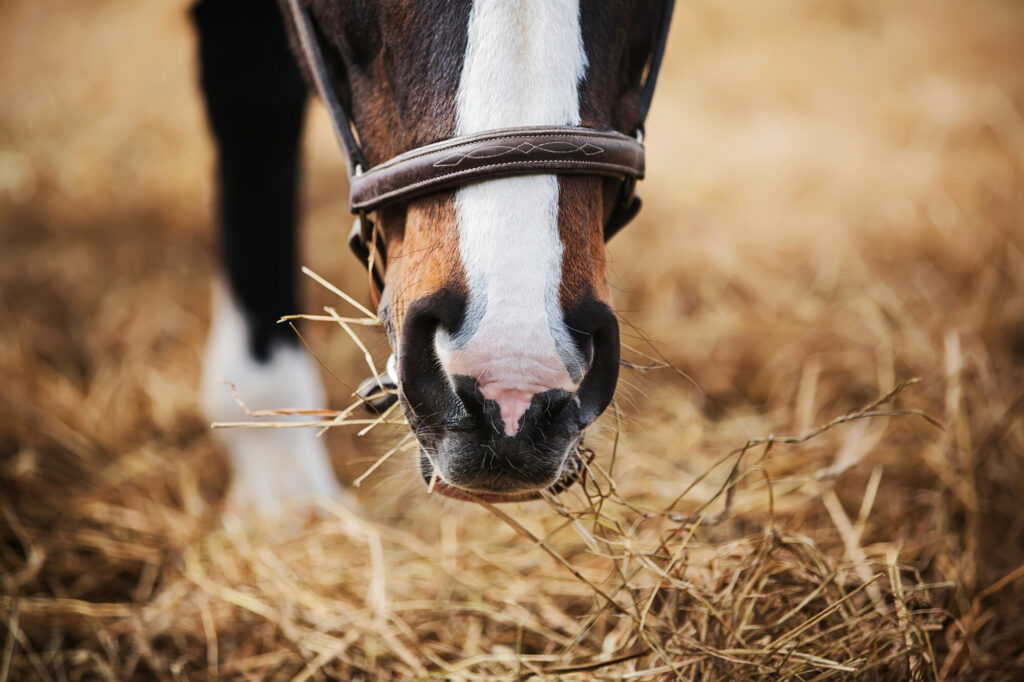
Nutritional Benefits
Hay serves as the primary source of fibre in a horse’s diet, aiding in proper digestion and gut health. Additionally, it provides essential nutrients such as protein, energy, vitamins, and minerals crucial for maintaining overall health and performance. Understanding the nutritional components of hay allows horse owners to make informed decisions when selecting the appropriate type for their equine companions. Hay isn’t the only source of food and nutrients for horses, see our range of horse feeds and straights to ensure you’re giving your horse a well balanced diet.
Selecting the Right Hay
When choosing hay, several factors need to be considered, including the horse’s age, activity level, and health status. For instance, young growing foals may benefit from nutrient-rich Alfalfa hay, while senior horses may require softer varieties like Orchard grass for easier chewing. Pregnant or lactating mares and working horses with higher energy demands may require hay with higher protein and energy content.
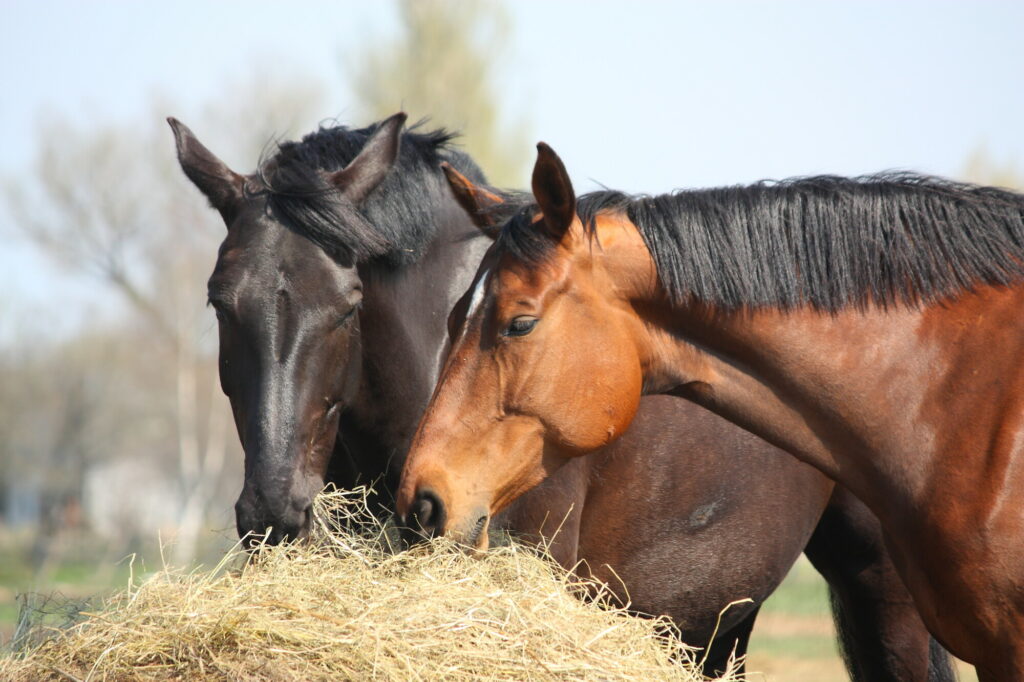
Hay Storage Tips
Proper hay storage is essential for maintaining its quality and nutritional value. Storing hay in a dry, well-ventilated area away from direct sunlight helps prevent moisture buildup, which can lead to mould and spoilage. Using elevated racks or pallets to keep hay off the ground reduces the risk of contamination from pests and moisture. Additionally, covering hay stacks with tarps or breathable covers can protect them from excessive drying while still allowing air circulation.
Gladwells Pet: Your Trusted Resource for Quality Hay Selection
Choosing the right hay for your horse is crucial for their health, performance, and overall well-being. By understanding the different types of hay available, their nutritional benefits, and how to select and store them properly, horse owners can ensure their equine companions receive the best possible nutrition. Implementing the tips outlined in this guide can help you make informed decisions when it comes to feeding your horse hay, ultimately contributing to their long-term health and happiness. If you feel you need to supplement your horses diet then see our horse & equine supplements.
Whether you’re a seasoned horse owner or new to equine care, incorporating these practices into your feeding regimen can make a significant difference in your horse’s quality of life. For further guidance or assistance with your horse’s nutritional needs, don’t hesitate to reach out to our team of experts at Gladwells Pets either instore or by contacting us.
Find your local store Get in touch
Haylage Balancer is a totally natural, nutritional support formula that will help your horse maximise his roughage intake, whilst helping to maintain a healthy, comfortable gut. By slowing down the rate of passage of partially digested food through the hind gut, Haylage Balancer also helps to maximise the digestion of roughage. Feeding Haylage Balancer may also mean you can cut back on concentrate feed. Maximising the digestion enables the horse to gain the most nutritional value from his forage, and the vitamins and minerals supplied by Haylage Balancer means the horse is receiving all the nutrients he requires.
PRODUCT DESCRIPTION
A specific, whole cereal free diet for donkeys, designed to be low in energy and protein but high in fibre. The ration is fully fortified to optimise body condition and health without providing excessive nutrients that can be detrimental to donkeys.
Donkeys have evolved to survive in some of the harshest environments. They are adapted to marginal desert lands where they browsed large plains that were devoid of lush vegetation. They survived on a diet that was highly fibrous and consisted of low-quality roughages. Their digestive systems are highly efficient at digesting these fibrous feeds, absorbing and utilizing the available nutrients.
Donkeys have much lower energy and nutrient requirements compared to horses and ponies. Normal healthy donkeys will do perfectly well on forage alone; however, there may be specific instances where supplementary feeding is necessary. Traditionally, donkeys have been fed diets that are formulated to meet the nutritional requirements of adult horses and ponies. Typically, for the majority of donkeys, this leads to a high intake of energy and protein, leading to weight gain, obesity and, in serious cases, the onset of laminitis.
Saracen Horse Feeds have combined their expertise with the UK’s leading care provider for donkeys to formulate a specific diet intended for donkeys who require supplementary feeding. In the case of older donkeys, donkeys that are working or lactating or for those who are difficult to keep condition on, DONKEY DIET will help to ensure that they remain in good body condition.
DONKEY DIET is based on digestible fibre sources to provide a source of ‘safer’ calories rather than using cereals and starch. Donkey Diet contains quality protein sources for optimum cell, tissue and muscle repair, whilst a full spectrum of vitamins and minerals helps to support metabolic systems and healthy hoof and coat. The high-fibre and low-energy formulation makes DONKEY DIET suitable to be fed to donkeys that are prone to laminitis or metabolic syndrome.
Older donkeys with poor teeth may find chewing long fibre sources, such as hay, more difficult. DONKEY DIET can be soaked into a soft and palatable mash, which can help to maintain fibre intake and ensure healthy digestive function.
DONKEY DIET is not designed to replace 100% of the donkey’s forage requirement, and short chopped forage sources should be fed in conjunction with DONKEY DIET.
SUITABLE FOR:
-
- The nutritional management of all donkeys
- Older donkeys
- Working or lactating donkeys
- Donkeys who are poor doers and require condition
FEATURES & BENEFITS:
- Specifically designed nutrition for donkeys
- Low energy feed
- High in digestible fibre providing a safe source of calories
- Can be soaked into a soft and palatable mash for donkeys with poor dentition
- Fortified with vitamins, minerals and trace elements